Showing posts with label Meat. Show all posts

Thursday, 27 May 2010

"taste no 5” or “taste chicken tsukune”?


I’m a lot wondering since when early-summer gets full of festivals in Tokyo. Foreign cultural events have gradually been tempting the young lads, as Jamaica, Thai and Laos, these three festivals made a consecutive success at Yoyogi Park, followed by one of the most iconic Shinto festivals called “Sanja Matsuri” in downtown Asakusa. If you want endless cheers with decent beer, just stop by German-imported “Oktberfest” currently ongoing in the other urban oasis, Hibiya Park and more to come.

This time of year is hearty enough to offer sunshine days which are perfect for singing, dancing, eating and drinking outside. Perhaps, we need some alfresco rituals to expel the rainy blues on its way. Festival is better than the songs of birds in Japan? At least, Tokyo is like so.

Well, cooking inside... This recipe has been a regular dish of my family since I happened to find the original in “Lee” a Japanese women’s lifestyle magazine almost ten years ago. “Tsukune” is basically referred to as chicken “balls” in Japanese yakitori cuisine, however, a little change in shape and flavour gives more elegant impact at the table, especially when you have dinner guests around. Your mouth will be delighted with the contrasting texture between the tender meat and the crunchy rotus root. The recipe is also a good specimen to showcase that Japanese “kombu” (kelp) is usable not only to accompany boiled rice, but to season in cooking. Sweet, salty and something intensified in one dish... The taste is 100% guaranteed!

PAN-FRIED CHICKEN TSUKUNE

* To make 9 pieces
300g minced chicken
100g lotus root (available in an Asian grocery)
30g shredded shiofuki-kombu (salty kelp. Available in a Japanese grocery)
1-2 shiitake mushrooms, finely chopped
1 tbsp sake (or dry sherry)
1 tsp soy sauce
2 tsp sesame oil
25cm x 25cm non-stick baking paper

1. Peel the rotus root and soak in lightly-vinegered water for 10 minutes to stop colouring. Cut into a couple of chunks, and bash with a rolling pin in a freezer bag until they are teaspoonful bits. Some are totally crumbled, but it’s fine.

2. Using your hands, mix the minced chicken, root, shiitake, soy and sake together in a bowl until well-combined. Add the shiofuki-kombu, mix gently this time and leave for 10 minutes until the flavour is settled.


3. Shape the mixture into a large single square on baking paper to a thickness of 1.5cm. Love this labour...

4. Heat the sesame oil in a frying pan over a medium heat. Carefully, lay the mixture on the pan, papered side up so that the baking paper can work like a lid to steam the whole mixture. In 5 minutes, remove the paper and turn the mixture over to cook until browned and just cooked through.

5. Remve it from the pan and cut into 9 squares. Serve hot, warm or even cold, so ideal for bento boxed lunch!

Tips:
1. In the shaping process of #3, don’t make it thinner to avoid cracks when cooked.
2. Help yourself to season with shichimi togarashi at the table if you prefer a spicy kick.
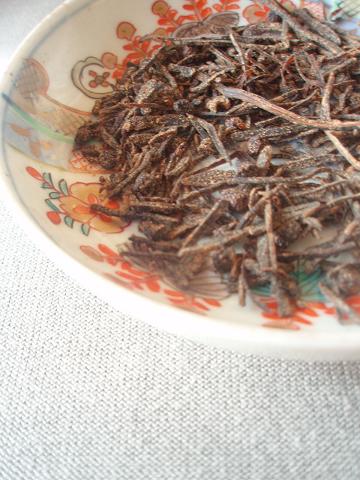


FYI, “kombu” (kelp seaweed), dried or fresh, has been consumed daily in various cookery forms such as dashi (broth), nimono (stewed dish) and tsukemono (pickles), but my favourite is “shiofuki-kombu” (salty kelp) on the photo. It’s a sort of semi-dried “tsukudani”, which is kelp, vegetable, fish or shellfish boiled down in soy sauce for a long time. If you see the whole surface of shiofuki-kombu is covered with salt-like fine powder, that’s exactly what we mean by “umami”, the Japanese sea-born savouriness. Ah, one more thing to share: nibble shiofuki-kombu on its own when sipping sake. Tasty, plus, it’s said amino acids in the kelp break down the alcohol component. Delicious science.

Japanese even has a fusion pasta recipe with shiofuki-kombu to toss. Hey, you don’t have to buy “Taste No 5”!!

Friday, 12 March 2010

sunday feast review


Nearly one month has gone since my last post. Apart from a couple of sunny days, it’s been cloudy, rainy and snowy in Tokyo. This is kinda typical weather in February and March, so we need a bit more time and patience to welcome the gloriously blossom season.

In the meantime, we had guests for Sunday dinner. Well, the cooking fuss of everyday is a nightmare, but spending almost half day in the kitchen with Mum once a month or so is a comfortable activity indeed. I also enjoy the heartwarming smell and familial conversation against cold raindrops outside. Dinner-making and feeding are, more importantly, our tangible hospitality to dearies.

There’s no category such as amuse-bouche, starter or main here, and no soup. Just go buffet! All the dishes (but puds) are served up together so that the relaxing mood can’t be cut off at the table. Have a closer look before my short memory has faded away...


SAVOURY

- Yamaimo nuggets with karashi-mentaiko (pollack roe marinated with red chilli)
It’s ridiculously easy to cook, yet must be served hot. Pls refer to the basic recipe although this time I encased a pinch of the spicy roe originated in South Japan.


- Veg batons with kaki-joyu (oyster soy) mayo dip
Fancy a subtle sea breeze in a warm room? A few drops of this oyster-flavoured soy sauce works to upgrade high-street mayonnaise, and the outcome accompanies any sort of vegetables, fresh or boiled. On a tip from a Japanese lady cook, Miyako Wakabayashi.

- Velvety mashed potato salad with egg-yolk in guise of mimosa blossoms
... As it is.

- Petit vail goma-ae (mixed with sesame seeds)
"Goma-ae" is a classic Japanese dish to mix greens with half-ground sesame seeds, soy and sugar. (See the above large photo) This time, we used “petit vail”, which is a recent variety of vegetable in Japan. The crunchy, sweet texture is just beautiful.. unlike its father, Brussels sprouts!


- Turnip and smoked salmon salad with yuzu-kosho dressing
Being basically a local condiment of South Japan, “yuzu-kosho” is widely available throughout Japanese island these days. It’s a ripened paste mixed with green chilli, green yuzu citrus and lots of salt, thus, very hot and salty. The usage as a condiment is versatile, from yakitori and nabemono (hotpot) even to pasta. And adding a small amount of yuzu-kosho to French vinaigrette provides a prompt oriental kick.

- Simmered chicken with gobo (burdock) root
Mum has noted this recipe from a TV cookery show presented by Yoshihiro Murata of a Michelin-stared Japanese high-end restaurant, “Kikunoi”. The soy-oriented seasoning is rather homely. Good.

- Marinated gyu-sashi (seared beef)
If good quality of Japanese beef fillet is chosen, “gyu-sashi” is a straightforward festive dish. I’m sure meaties must fall in love with the meltingly tender and succulent slices. The process of marinating with soy, mirin (sweetened sake) and dashi (fish broth) gives an extra depth of flavour on your tongue. Worth a try.

- Spicy pork spareribs
I find soy is a good friend with garam masala. Uncomplicated to cook again as the recipe is not only pan-fried, but marinade-free, plus, tastes wonderful.

- Tonkatsu (deep-fried breaded pork) sushi rolls
Maybe, pork fillet is an unfamiliar filling for sushi roll, but tasty for sure. The key is to add a plenty of shredded “shiso” leaves when rolling up. Pungent shiso works as a liaison between the two different flavours: vinegared rice and meaty fry. Utterly delish!

- Chilli corn carne with cheesy tortilla
This is not so flamboyant as to pimp up the feast, but I wanted to cook something like tomato-intensified deep colour in freezing winter. My chilli of this day was South American style adding black beans.


WINE

- Grace Koshu (white, Japan)
That’s not all about “Grow local, Eat local”. The elegant, smooth and a little smoky texture matches the feathery weight of "washoku" (Japanese cuisine).

- Château Thil Comte Clary 2005 (white, France)
Full-bodied. An interesting contrast with the Japanese breed.

- Gosh... can’t remember (red, France)

.. No cheese.


AFTERS

- Strawberry roulade
This home-made pudding was brought by our guests. The simple trio: organic strawberry, fluffy sponge and cream indulges our palates.

- Earl Grey tea biscuits
In spite of the ready-made status, fine.

- Earl Grey tea & Green tea
To finish up our long eating... and chirping.


Well, sounds too much for six people? In several hours, all had gone to our greedy stomachs!!

Monday, 18 January 2010

wintry letter to Nigel


Dear Nigel,

Freezing winter days urge me to eat something rich, filling, but not stodgy. So I decided to make cream pasta, following your cookery suggestions in the BBC TV series, “Simple Suppers”.

Well, I replaced chopped sausages with hand-rolled meatballs because to get hold of “good” quality sausages are not easy in my surrounding environment in Tokyo. Moulding plenty of edible balls is time-consuming, but the plain and repetitive action brings peace of mind in this floating world rather than causes a nervous breakdown... believe me.

CREAM PASTA WITH MEATBALLS

* Serves 2
200g penne (or any other pastas as you like)

Meatballs:
250g minced pork
1 tbsp breadcrumbs
1 tbsp milk
2 tsp Parmesan cheese, grated
1/4 tsp rosemary, finely chopped
Salt and pepper
Olive oil

Sauce:
200ml single cream
1/2 medium onion, thinly sliced
1 tbsp flat-leaf parsley, roughly chopped, plus extra to serve
2 tsp Parmesan cheese, grated, plus extra to serve
1 heaped tsp Dijon mustard
A dash of white wine
Salt and pepper
Olive oil

1. To make the meatballs, mix the minced pork, breadcrumbs, milk, Parmesan and rosemary together in a bowl until evenly combined. Season with salt and pepper, mixing with your hands.

2. Shape the dough into around 45 small balls (...phew!) and place on a tray.

3. Heat the olive oil in a frying pan. Add the meatballs and fry for 5 minutes, swirling frequently. When browned all over, remove from the pan and lay on kitchen paper.

4. To make the sauce, heat the olive oil in a frying pan. Stir the onion until softened and add the meatballs, flat-leaf parsley, Parmesan, Dijon mustard and wine. Then, pour the single cream and simmer for 5 minutes until the meatballs are cooked through. Season with salt and pepper.

5. Meanwhile, boil the penne. Bring a deep pan of salted water to the boil. Add the penne and cook until al dente according to the packet instructions.

6. Drain the penne, reserving a little of the cooking water, and toss with the sauce. Add a little of the cooking water if the consistency of the sauce is too thick.

7. Serve immediately, sprinkled with extra Parmesan and parsley.


Tips:
1. The point of this recipe is to keep the meatballs almost “tiny” like a teaspoonful size to balance with the penne.
2. In the process of #4, you can add Dijon mustard as well as its grainy version as Nigel does. Yet, my personal palate is happy with only the former.

Nigel, I really fancy your honest, healthy and uncomplicated approach on daily food. Your latest book, “Tender: volume I”, which is my current read, is not just about growing, cooking and eating vegetables in a not-vegetarian-but-omnivorous way. Your writing style and photography heal my stressed soul, indeed!


Last but not least... Nigel Slater is the most successful food writer and cook in Britain.
Related Posts with Thumbnails